01 / INSPECT
Testing & Measurement
Dimensional, geometry, load and condition assessment supporting maintenance and verification decisions.



CBP connects specialist international railway manufacturers with Indonesian operating requirements across measurement, lifting, shunting, component maintenance and recovery.
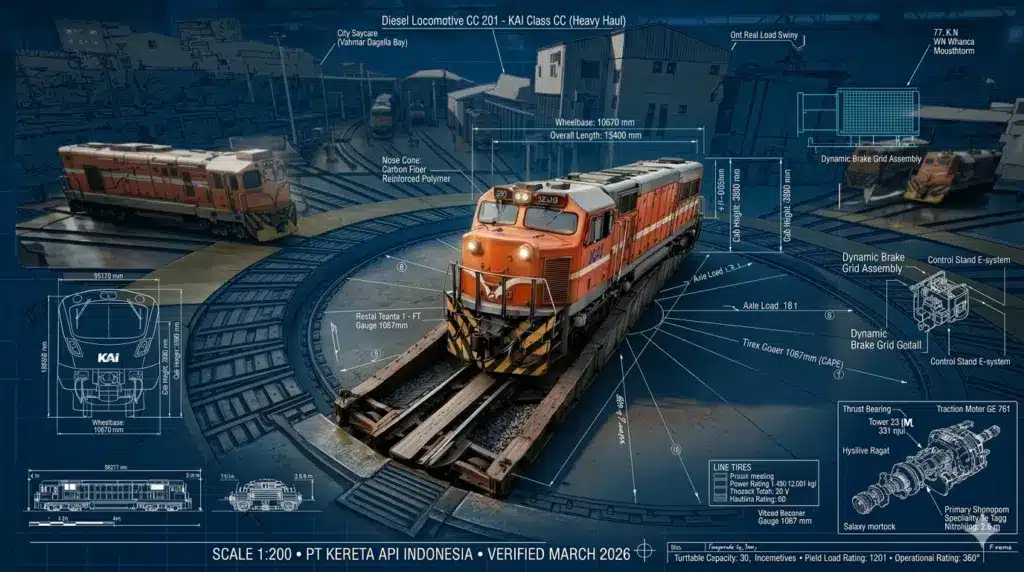
Selected Indonesian references show how specialist railway technology has been applied across depot lifting, track inspection, shunting and maintenance environments.
Deployed underfloor synchronized lifting infrastructure for the LRT Jabodebek maintenance environment, supporting full-trainset elevation and heavy-maintenance access.
Delivered track-geometry maintenance equipment for LRT Jabodebek, adding a field measurement reference alongside CBP’s depot-equipment experience.
Delivered a Zephir road-rail shunting vehicle for the Soekarno-Hatta Airport APMS maintenance facility.
CBP has deployed synchronized lifting systems across multiple Indonesian depot and workshop environments, including Solobalapan, Cipinang and Bukitputus.
CBP connects specialist manufacturer technology to Indonesian railway requirements while keeping technical decisions with the manufacturer responsible for the system.
Technology definition, technical documentation, product decisions and manufacturer support.
Application alignment, local coordination and project interface.
Operators, depots, workshops, contractors, procurement teams and project conditions.
Explore CBP by operating need: inspect, lift, move, restore and recover. Each route connects the application to the relevant specialist manufacturers.
Dimensional, geometry, load and condition assessment supporting maintenance and verification decisions.
Controlled elevation, access and support functions within depot and workshop maintenance environments.
Vehicle movement and positioning functions for constrained railway maintenance environments.
Maintenance functions where geometry, repeatability and controlled overhaul affect fleet performance.
Road-rail recovery, rerailing and emergency-response equipment for incidents and disabled rolling stock.
From inspection and measurement to depot lifting, shunting, recovery and maintenance equipment, the network makes specialist capability easier to find while each manufacturer retains technical authority for its own technology.










The complete manufacturer network remains visible here. Detailed technology scope and railway application are organized on the Partners page.
View Technology NetworkNational rail, urban transit, rolling-stock manufacturing, depots, workshops and infrastructure programs each create different technical constraints. CBP connects specialist technologies to those operating contexts.






The organizations shown represent the Indonesian railway environment relevant to CBP’s work across national rail, urban transit, rolling stock and supporting infrastructure. Inclusion here does not by itself indicate a current customer, project, agency or contractual relationship.
Start with the vehicle, site, maintenance task or operating constraint. Use the solution families and project references above, then bring CBP the technical requirement.
Start with the vehicle, site, maintenance task, operating constraint and the outcome the railway needs.
Compare the technologies and specialist principals that address the operating need.
Use the closest deployed references to understand what has already been applied in comparable railway environments.
Share specifications, drawings, operating conditions and the procurement stage so the relevant technology path can be developed.